

Driving every day is a daily activity for many people, however it might have a negative impact on the environment. Vehicles produce toxic gasses which cause air pollution and climate change. Even minor adjustments to your driving style can have a significant impact.
You can lessen your effect on the environment, and save money and fuel by driving smarter. Driving sustainably is simple and helps build a cleaner, greener future. In this guide, you will learn methods to help the environment and eco-friendly driving tips for beginners.
The Importance of Eco-Driving
Eco-driving is a method of driving in a way that minimizes environmental damage and fuel use. It helps not just the environment but also your wallet as well. You save money when you use less fuel. Furthermore, sustainability extends the life of your vehicle, which ultimately saves you even more money.
Driving more sustainably reduces greenhouse gas emissions and air pollution. This is significant since these gases are a contributing factor to climate change. Eco-friendly driving practices can have a significant impact on the environment if everyone practices these.
The Environmental Impact of Driving
When cars consume fuel, they produce toxic gases like carbon dioxide (CO2). The Earth warms as a result of these gases’ capacity to trap heat in the atmosphere. We call this global warming. It causes problems such as rising sea levels, severe weather, and damage to species.
Additionally, driving reduces natural resources. Fuel is a limited resource that takes millions of years to create. Excessive oil usage damages the environment and increases the cost of fuel.
By lowering pollutants and fuel consumption, sustainability contributes to the reduction of these issues. Over time, even minor adjustments like monitoring your tires or driving smoothly might have an important impact.
Pre-Driving Tips: Preparing for Sustainable Driving
There are several things you can do to ensure your automobile runs effectively before you go behind the wheel:
Keep Your Car in Good Shape
The secret to ecological driving is routine maintenance. Regularly check the engine, air filters, and oil in your vehicle. A well-maintained vehicle consumes less fuel.
Check Tire Pressure
Underinflated tires increase road resistance this is why your automobile has to work more and burns more fuel. Maintain the right tire pressure by checking it at least once a month.
Remove Extra Weight
Having heavy objects in your car might make it use more fuel. To make your car lighter, remove anything you don’t need, such as sports equipment or tools.
Plan Your Route
Choose the fastest way and plan your travels to avoid traffic. This saves time and fuel. A GPS or navigation app can help you stay on track and save fuel.

Fuel-Efficient Driving Techniques
Your driving lesson has a significant effect on how much fuel you use. The following advice can help you drive more effectively:
Accelerate Slowly and Smoothly
To stop wasting fuel, lightly press the pedal. Sudden acceleration increases fuel use and energy consumption.
Maintain a Steady Speed
It uses less fuel to drive slowly than to accelerate and decelerate all the time. If your automobile has cruise control, use it on highways.
Drive at the Right Speed
The majority of vehicles use less fuel when traveling at 50–80 km/h (30–50 mph). Driving too slowly or too quickly might increase fuel consumption.
Use Engine Braking
Remove your foot off the pedal and allow your automobile to slow down naturally rather than using the brakes. This reduces brake wear and conserves fuel.
Smart Use of Car Features
There are features in modern automobiles that might help you preserve fuel. Here’s how to make good use of them:
- Fuel consumption rises as an outcome of air conditioning’s increased energy usage. Try opening the windows when traveling at slower speeds, and only do it when necessary.
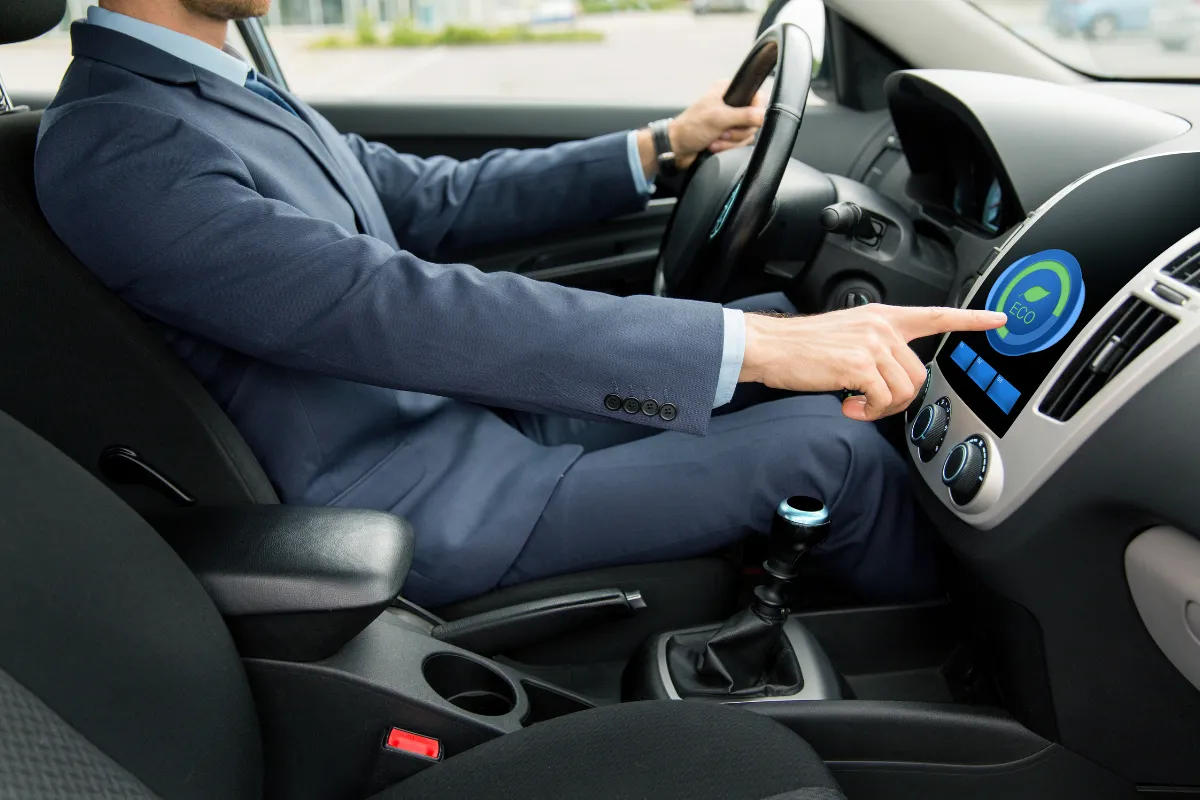
- The “Eco” mode on many cars modifies the engine and gearbox to save fuel. When traveling on smooth roads or in urban areas, turn it on.
- A dashboard display on some automobiles may show how much fuel you’re using. Make use of this tool to monitor your driving efficiency.
- Features that consume more energy include entertainment systems, rear defrosters, and heated seats. Turn them off when not in use.
Long-term Considerations
Planning for the future is just as important as driving efficiently today. The following are some long-term actions to think about:

Choose a Fuel-Efficient Car
Look for a car with high fuel efficiency if you’re buying a new one. Since hybrid or electric vehicles use little or no fuel, they are much more environmentally friendly.
Consider Public Transportation
Instead of driving, use the bus, rail, or bicycle whenever you can. These choices can often be more affordable and environmentally friendly.
Join a Car-Sharing Program
You can only use a car when you need it because of car-sharing apps. As a result, there are fewer cars on the road, which lowers pollution.
Learn About Alternative Fuels
Some vehicles can operate on alternative fuels like ethanol, biodiesel, or others. Compared with traditional fuel, these alternatives are more sustainable and clean.
Driving Toward a Greener Future
Environmentally friendly driving is an easy method to have a significant impact on the environment. You can reduce emissions, save money, and add to the protection of the environment for coming generations by adopting eco-friendly driving tips for beginners.
Make little adjustments first, such as checking your tires, driving smoothly, and making sensible use of the car’s facilities. These practices will eventually become routine, and you’ll notice the improvements in both the health of the world and your fuel costs.

